About Lined Ball Valve
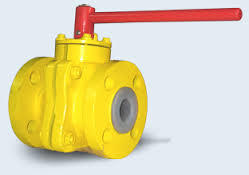
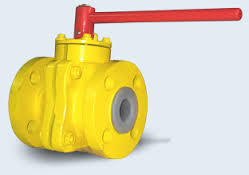
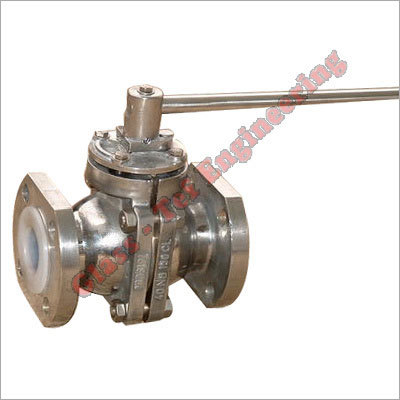
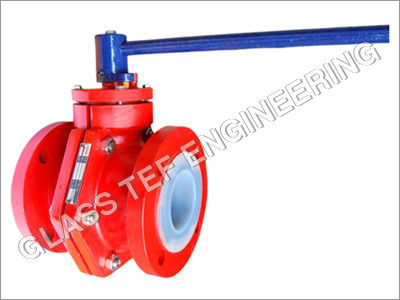
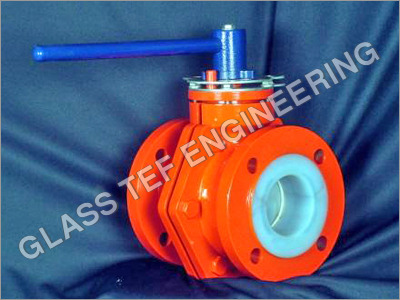
We are here with Ball Valve that has a round closure element, which uses a ball to control the flow through it. The valve is mainly used in conditions where tight shut off is required. It is able to transfer liquids, gases, liquids with suspended solids, etc. The product is made up of stainless steel with PTFE seats and seals. Thus, it is durable, reliable, and perform well in diverse conditions. With the features of our Ball Valve such as ease of operations, versatility and low maintenance, it is used for several industrial purposes.
Some of its other Features are:
- Offers extensive corrosion resistance for most of the applications
- Supports pressure of up to 752oF (400oC)
- Ensure no leakage with tight seals
- Replaceable and easy grip handle
Constructed with a high-performance PTFE/FEP/PFA lining, these ball valves excel in handling corrosive and hazardous liquids commonly encountered in chemical processing and water treatment industries. With a minimum liner thickness of 3 mm, they effectively safeguard the valve body against aggressive media, extending service life and minimizing maintenance cycles.
Precision Engineering and Global StandardsOur lined ball valves are designed to meet stringent global standards, including API 6D, ASME B16.34, and API 598 testing for integrity and reliability. The flanged ends conform to ANSI B16.5/ASA 150#/DIN/BS standards, ensuring compatibility with diverse piping systems across industries, while face-to-face dimensions comply with ISO 5752 for easy installation and replacement.
Versatile Operation and Easy AutomationDepending on your specific application, these valves can be operated manually via lever or gear, or automated with pneumatic or electric actuators (24V/220V). The ISO 5211 top flange makes integration with automation systems simple, allowing for greater process control, safety, and remote operation wherever required. Field repairability supports minimal downtime.
FAQs of Lined Ball Valve:
Q: How does the PTFE/FEP/PFA lining enhance the valves performance in corrosive applications?
A: The PTFE/FEP/PFA inner lining provides a robust barrier against aggressive chemicals, preventing corrosion of the valves metal components. This extends the operational lifespan of the valve and ensures reliable performance when handling toxic or corrosive media in chemical, pharmaceutical, and water treatment plants.
Q: What is the standard end connection for these lined ball valves and why is it important?
A: These valves use flanged connections in compliance with ANSI B16.5/ASA 150#/DIN/BS standards. This universal compatibility ensures secure, leak-free joints with various international piping systems, facilitating straightforward installation and integration into existing infrastructure.
Q: When should I choose automation (pneumatic/electric actuators) over manual operation for these valves?
A: Automation is preferred when remote operation, rapid response, or process integration is requiredfor example, in automated chemical dosing or flow control in larger industrial systems. Manual operation via lever or gear is ideal for smaller scale or less frequently adjusted applications.
Q: Where are these lined ball valves typically installed?
A: These valves are widely utilized in industries such as chemical processing, pharmaceuticals, water treatment, and other sectors handling corrosive, hazardous, or high-purity liquids. Their design, materials, and integrity make them suitable for both indoor and outdoor use in industrial facilities.
Q: What is involved in the inspection and testing process for these valves?
A: Each valve undergoes rigorous inspection and testing as per API 598 standards. This includes hydrostatic testing for pressure containment and seat leakage tests (Class VIbubble tight) to ensure zero-leakage performance before shipment, delivering peace of mind and regulatory compliance.
Q: How can field repairability benefit my maintenance operations?
A: Field repairable construction allows for maintenance and replacement of critical parts without removing the valve from the pipeline. This minimizes downtime, reduces maintenance costs, and supports long-term valve performance, essential in continuous process environments.
Q: What are the main benefits of choosing a blowout-proof stem and optional fire-safe design?
A: A blowout-proof stem improves operational safety by ensuring the stem cannot be ejected from the body under pressure. The optional fire-safe design enhances protection in case of fire, maintaining seal integrity and process containment, further safeguarding facility operations.






 Send Inquiry


 Send Inquiry
 Send Inquiry
 Send SMS
 Call Me Free
 English
 Spanish
 French
 German
 Italian
 Chinese (Simplified)
 Japanese
 Korean
 Arabic
 Portuguese