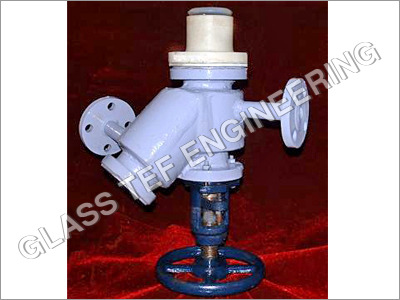
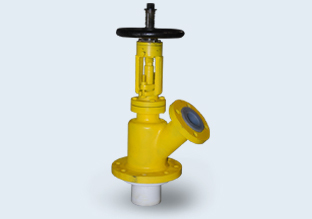
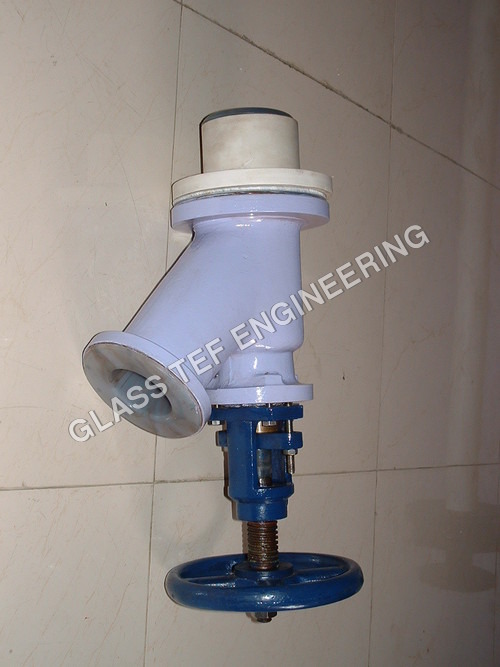
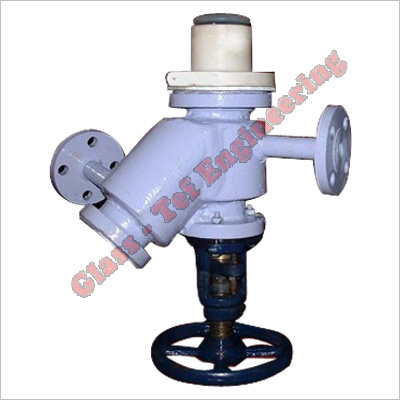
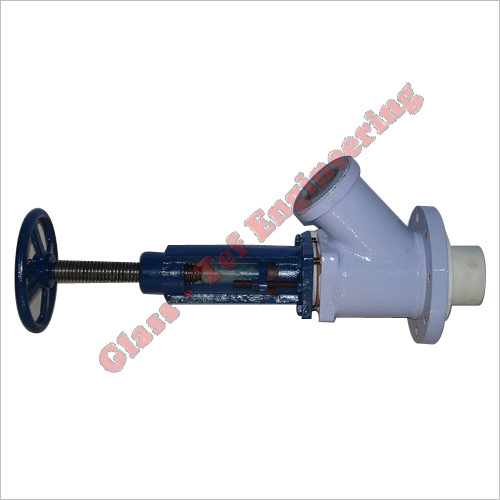
About Jacketed Flush Bottom Valves
We are instrumental in offering an extensive range of Jacketed Flush Bottom Valves. These valves are designed and developed employing advanced technology so that the final output meets with the international quality standards. We are offering these that are well appreciated by patrons for their various features like corrosion resistance, seamless finish, sturdy construction and easy installation. Before we deliver, these valves are stringently checked on various parameters to ensure flawless finish. Jacketed Flush Bottom Valves are delivered to clients within the stipulated time period.
Other information:
Specification:
- Body : Wcb body With Jacket ,
- Lining : Fep /PFA
- Lining Thickness : 3.5 Mm Minimum
- Testing : Pressure : Body :15Kg/Cm2 Seat : 10 Kg/Cm2
- Spark Test: 15 Kv
- Sizes Available ( Inlet X Outlet) : 80nb X 50nb ( 3" X 2"), 100 X 80 ( 4 " X 3"), 150nb X 100nb ( 6" X4")
- Flange End Connection : Split Type Flange, Flange end
Product details
| Design Standard | yes |
| Size | all |
| Brand | glass tef |
| Pressure | high |
| Color | all |
| Material | plastic |
Advanced Design with Versatile ApplicationOur jacketed flush bottom valves are tailored for industries that require thorough drainage and precise sampling from vessels or reactors. The jacketed body allows for effective heating or cooling, making them suitable for handling sensitive or viscous materials while maintaining product integrity and process efficiency.
Reliability and Easy MaintenanceConstructed using corrosion-resistant stainless steel or alloy materials, these valves are built for durability. The zero dead leg design reduces contamination risk and simplifies cleaning, making them ideal for hygienic applications. Quick disassembly ensures downtime is minimized, helping maintain your productivity.
Broad Actuation and Connection OptionsChoose from manual, pneumatic, or electric actuation to suit your operational needsthe electric options are available in 24V, 110V, and 230V variants. Flexible connection types, including flanged, butt weld, socket weld, and threaded, provide integration ease with various piping systems.
FAQs of Jacketed Flush Bottom Valves:
Q: How does a jacketed flush bottom valve benefit processes in pharmaceutical, chemical, or food industries?
A: Jacketed flush bottom valves allow precise, contamination-free draining or sampling of liquids and slurries directly from vessel bottoms. The jacketed design enables temperature control through heating or cooling, essential for process stability and product quality in sensitive applications.
Q: What are the available actuation and control system options for these valves?
A: These valves can be operated manually or equipped with pneumatic or electric actuators, allowing for integration with automated control systems. Electric actuated valves are available in 24V, 110V, and 230V versions, ensuring compatibility with industry-standard power supplies.
Q: When should a jacketed flush bottom valve be utilized instead of a regular bottom valve?
A: Use a jacketed flush bottom valve when the process medium requires controlled temperature, such as for preventing solidification or maintaining viscosity. It is particularly beneficial in industries handling heat-sensitive or high-purity products.
Q: Where are jacketed flush bottom valves typically installed?
A: They are installed at the lowest point of reactors, tanks, or vessels requiring complete drainage, usually as a bottom-mounted or angle-type valve. Installation is common in pharmaceutical plants, chemical factories, food facilities, and general process industries.
Q: What sizes and pressure ratings are available for these valves?
A: Standard sizes range from DN25 to DN150 (1 to 6), with pressure ratings up to 40 bar, customizable as per application requirements. This flexibility ensures suitability for a wide range of flow rates and vessel sizes.
Q: How is ease of maintenance ensured in these valves?
A: The zero dead leg design prevents media retention, reducing cleaning requirements and contamination risk. The valves can be quickly disassembled for inspection or servicing, and they are compatible with Clean-in-Place (CIP) and Sterilize-in-Place (SIP) systems.






 Send Inquiry


 Send Inquiry
 Send Inquiry
 Send SMS
 Call Me Free
 English
 Spanish
 French
 German
 Italian
 Chinese (Simplified)
 Japanese
 Korean
 Arabic
 Portuguese