About Ptfe Lined Diaphragm Valve
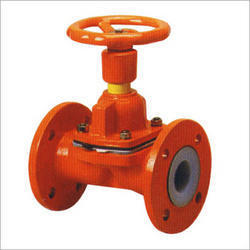
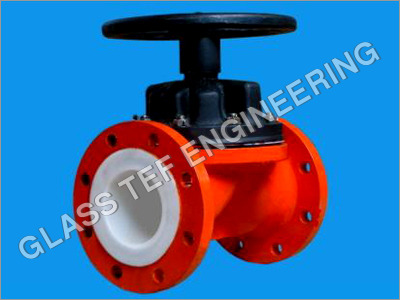
To withstand tough work environment of chemical processing, corrosive industry, pharmaceutical, etc, PTFE Lined Diaphragm Valve is offered by us. It is designed to suit shut off, flow control and throttling of corrosive material in either gaseous or liquid state. The product is robust and heavy duty in construction with easy replacement on site and have lower maintenance. Our PTFE Lined Diaphragm Valve is flexible, convenient, have accurate open or close and 100% leak tight.
Superior Corrosion ResistanceWith a PTFE lining thickness of 2.53.5 mm and an epoxy-coated cast iron or ductile iron body, this diaphragm valve provides exceptional protection against aggressive media. The materials and finish safeguard internal and external surfaces, extending valve life and reducing maintenance frequency even in the harshest operational environments.
Versatile Operation Across StandardsBuilt to accommodate various industry standards, the valve is available with end connections conforming to EN, ANSI, JIS, and DIN norms. Its bidirectional flow design and customizable port sizes (DN15DN300) make it versatile for diverse pipelines and process applications.
Reliable Bubble Tight SealingAchieve optimal shut-off with Class VI (bubble tight) leakage performance. The PTFE/EPDM reinforced diaphragm and PTFE coated disc ensure a hermetic seal, making the valve suitable for applications where absolute leak prevention is crucial, such as with hazardous or costly fluids.
FAQs of Ptfe Lined Diaphragm Valve:
Q: How does the PTFE lining benefit the diaphragm valve in corrosive chemical applications?
A: The PTFE lining offers superior resistance to a wide variety of aggressive chemicals and corrosive fluids, protecting internal surfaces from degradation. Combined with an epoxy-coated exterior, the valve stands up to harsh environments and extends operational lifespan.
Q: What are the recommended usage scenarios for this valve?
A: This valve is ideal for chemical process industries, handling corrosive media, liquids, slurries, and aggressive chemicals. Its robust construction and bubble tight sealing make it particularly suitable for processes where leak prevention and durability are essential.
Q: When should I choose a pneumatic actuator instead of manual operation?
A: A pneumatic actuator is recommended for automated systems, remote locations, or installations requiring rapid and frequent operation. Manual handwheel actuation is ideal for applications needing less frequent adjustment or where automation is not necessary.
Q: What international standards are met by this PTFE lined diaphragm valve?
A: The valve is designed and manufactured to comply with BS 5156 and BS 1868 for design, API 598 for pressure and leakage testing, and features end connections as per EN, ANSI, JIS, and DIN standards.
Q: How is the valve tested for operational performance?
A: Each valve undergoes a hydraulic test in accordance with API 598, verifying its pressure retention and ensuring compliance with Class VI (bubble tight) leakage standards before delivery.
Q: Where is this valve typically installed within industrial setups?
A: Youll commonly find these valves installed in chemical plants, process industries, pharmaceuticals, water treatment systems, and any facilities where aggressive chemicals and high-purity processes require reliable and leak-free flow control.
Q: What are the main benefits of the two-way bonnet with PTFE lining?
A: The two-way bonnet with encapsulated PTFE lining ensures consistent sealing performance and protects system integrity. This design enhances chemical resistance and minimizes the risk of leaks, making the valve maintenance-free and dependable for demanding applications.






 Send Inquiry


 Send Inquiry
 Send Inquiry
 Send SMS
 English
 Spanish
 French
 German
 Italian
 Chinese (Simplified)
 Japanese
 Korean
 Arabic
 Portuguese